

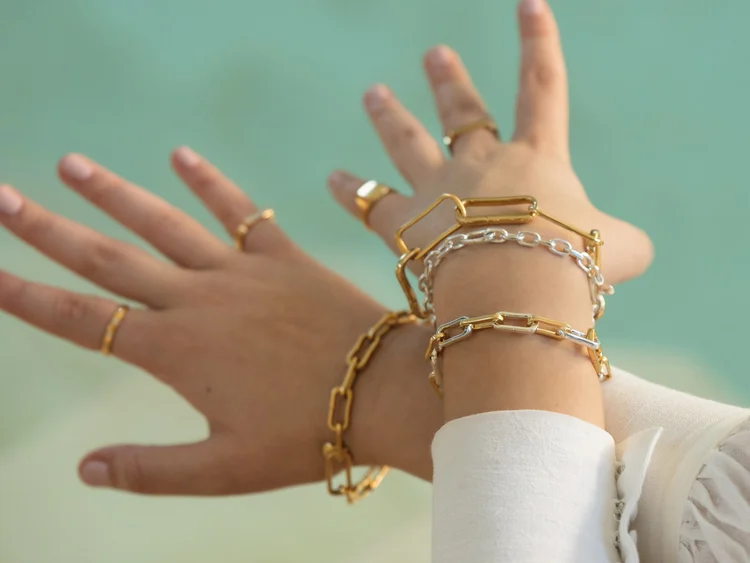
For decades, traditional style manuals dictated a strict, unyielding approach to personal accessorizing: you could wear gold jewelry, or you could wear silver jewelry, but you could never wear both simultaneously. This outdated standard treated different precious metals as competing forces that would clash if brought into close proximity.
The modern fashion landscape has completely dismantled this restrictive barrier. Today, combining different metal tones is recognized as an effective way to inject texture, depth, and a contemporary edge into your personal style. However, successfully abandoning the old rules does not mean operating in complete chaos. Moving from a single-metal look to a multi-toned arrangement requires a strategic approach. Without deliberate styling choices, a mixed-metal layout can easily look disorganized rather than intentional. By mastering a few core principles, you can confidently blend gold and silver to create a cohesive, balanced, and elevated aesthetic.
Establish an Intentional Anchoring Strategy
The foundational challenge of mixing gold and silver jewelry is making the combination look entirely deliberate. If you wear an assortment of yellow gold pieces and add a solitary sterling silver ring, the silver piece will look like an oversight or an accidental inclusion. To prevent this, you need a clear anchoring strategy.
The most effective method for anchoring a multi-toned look is using a bridge piece. A bridge piece is a single item of jewelry that natively incorporates both gold and silver tones within its structural design. Examples include a two-tone luxury watch with an interwoven gold and stainless steel band, a twisted cable bracelet that alternates metal strands, or a nested pendant featuring interlinked precious metal rings.
When you position a bridge piece within your layout, it acts as a visual translator. It instantly signals to the observer that the presence of both metal tones across your hands, wrists, or neck is a purposeful design choice. Once this bridge is established, you can freely distribute independent gold and silver pieces throughout the rest of your ensemble, as the anchoring item connects the entire look.
Maintain Uniformity in Theme and Aesthetic
While you are encouraged to experiment with contrasting metal colors, you should maintain consistency when it comes to the underlying style, era, and finish of the jewelry. Mixing too many design variables simultaneously creates visual friction that disrupts the harmony of an outfit.
If you decide to wear vintage, intricately detailed yellow gold pieces with heavy filigree or an antiqued patina, pair them with silver pieces that feature a similar historical feel or oxidation pattern. Conversely, if your stylistic preference leans toward clean, minimalist, geometric designs, ensure both your gold and silver selections feature sleek silhouettes, high-polish finishes, and sharp lines.
-
High-Polish Consistency: Brilliant, reflective yellow gold pairs beautifully with bright, polished sterling silver or white gold, creating a vibrant look.
-
Matte and Brushed Harmony: Satin, brushed, or hammered metal surfaces should be paired across color lines to maintain a subtle, under-stated elegance.
-
Sizing Proportion: Ensure the physical weight and scale of the pieces balance each other out; do not pair an exceptionally chunky silver industrial chain with an ultra-fine, delicate gold thread necklace unless you are deliberately creating a tiered contrast profile.
The Rule of Proportions and the Primary Metal Dominance
Achieving a balanced aesthetic when mixing metals requires avoiding a perfect fifty-fifty split. When you wear an equal amount of gold and silver jewelry, the eye struggles to find a clear focal point, which can make the overall look feel fragmented.
Instead, implement a clear structural hierarchy by selecting one metal to serve as the dominant base tone while using the second metal as an accent color. A reliable ratio to aim for is roughly seventy percent of your dominant metal paired with thirty percent of your accent metal.
For example, if your personal style or skin tone naturally aligns with yellow gold, make gold the primary theme of your accessories. Wear a base of gold chains, a gold watch, and gold earrings. Then, introduce silver strategically, perhaps through a couple of slim silver stacking rings or a single silver cuff bracelet. This approach allows the accent metal to break up the monotony of the dominant tone without overwhelming the overall composition of your outfit.
Master the Art of Layering and Stacking
The most dynamic way to showcase a mixed-metal approach is through localized clustering, specifically via ring stacks, layered necklaces, or wrist curation. Grouping metals together in close proximity makes the contrast look intentional and stylish.
When stacking rings on a single hand, avoid segregating metals by finger. Instead of wearing all gold rings on your index finger and all silver rings on your ring finger, interweave the tones on the same digit. Alternating a slim gold band with a slim silver band creates a beautiful contrast that accentuates the unique color properties of both precious metals.
For necklace layering, the secret to success lies in varying the lengths and weights of the chains. You can arrange a series of three necklaces starting with a short, delicate silver choker, followed by a mid-length gold cable chain hosting a pendant, and finishing with a longer, heavier silver rope chain. By spacing the pieces out down your neckline, you create a tiered waterfall effect where the alternating colors complement each other instead of getting tangled into an indistinguishable clump of metal.
Take Your Wardrobe and Skin Tone Into Account
Jewelry does not exist in a vacuum; it interacts constantly with the colors of your clothing and the natural undertones of your skin. Understanding these interactions helps you choose which metal should take the dominant role in your layout.
Traditional styling advice suggests that individuals with cool skin undertones look best in silver, while those with warm undertones are flattered by gold. When you mix metals, you gain the ability to transcend these limitations. If you have cool undertones but love the warmth of gold, you can establish silver as your seventy percent dominant base to flatter your skin tone, and then safely introduce thirty percent gold accents to enjoy the warmth of the yellow metal without washing out your complexion.
Furthermore, use your wardrobe as a neutral canvas for your mixed-metal experiments. Solid, monochromatic outfits in neutral shades like charcoal gray, crisp white, deep navy, or classic black provide an ideal backdrop. A neutral background allows the interplay between the warm gold tones and cool silver tones to stand out clearly, turning your jewelry choices into the central design feature of your overall presentation.
Frequently Asked Questions
Can I mix rose gold with yellow gold and silver simultaneously?
Yes, you can absolutely introduce rose gold into a gold and silver combination, creating a tri-metal look. Rose gold possesses a unique copper alloy base that serves as an excellent intermediary tone, softening the high contrast between bright yellow gold and cool silver. To execute this successfully, apply the same rule of dominance: choose one of the three metals to comprise the vast majority of your look, and use the remaining two metals as minor, balanced accents.
Is it acceptable to mix real gold and silver jewelry with fashion or costume jewelry?
It is generally best to avoid mixing high-fine jewelry with inexpensive base-metal costume jewelry. High-quality sterling silver and solid gold possess a distinct metallic weight, depth of color, and reflective luster that fashion jewelry, which is often made of plated brass or nickel, cannot replicate. Placing them right next to each other can cause the fashion jewelry to look dull or artificially bright, which can diminish the premium look of your genuine pieces.
How do gemstones and diamonds affect a mixed-metal jewelry arrangement?
Diamonds and clear gemstones act as neutral elements within a jewelry layout, meaning they do not disrupt the balance between gold and silver. They simply add brilliance and draw the eye to the piece. However, if you are wearing vibrant colored gemstones like sapphires, rubies, or emeralds, you should ensure the gemstone colors align with your dominant metal choice to prevent the overall look from becoming visually oversaturated.
Will wearing gold and silver jewelry in direct contact cause physical damage to the metals?
Yes, there is a minor mechanical risk to keep in mind when stacking rings or bracelets made of different metals. Gold is a relatively soft, malleable precious metal, especially in higher karats like eighteen karat or twenty-two karat. Sterling silver and stainless steel are notably harder materials. When these pieces rub directly against each other during daily movement, the harder silver or steel can gradually scratch or wear away the surface of the softer gold piece over time.
How should I handle hardware like belt buckles and shoe clasps when mixing jewelry metals?
You do not need to match your jewelry perfectly to the utilitarian hardware on your clothing, but keeping them in mind helps create a polished look. If you are wearing a belt with a massive, prominent silver buckle, it is wise to make silver the dominant metal in your jewelry mix for that day. If the hardware on your shoes, bags, and belts is small or hidden, you can disregard it entirely and focus solely on balancing the jewelry pieces themselves.
Can I wear a two-tone watch as my sole bridge piece?
A two-tone watch is one of the most effective bridge pieces you can own. Because a watch is a significant, prominent accessory worn on the wrist, a design that explicitly combines gold and silver or steel instantly establishes a unified theme for your entire outfit. With a two-tone watch in place, you can wear a gold ring on one hand and a silver necklace around your neck without any risk of the combination looking accidental.