

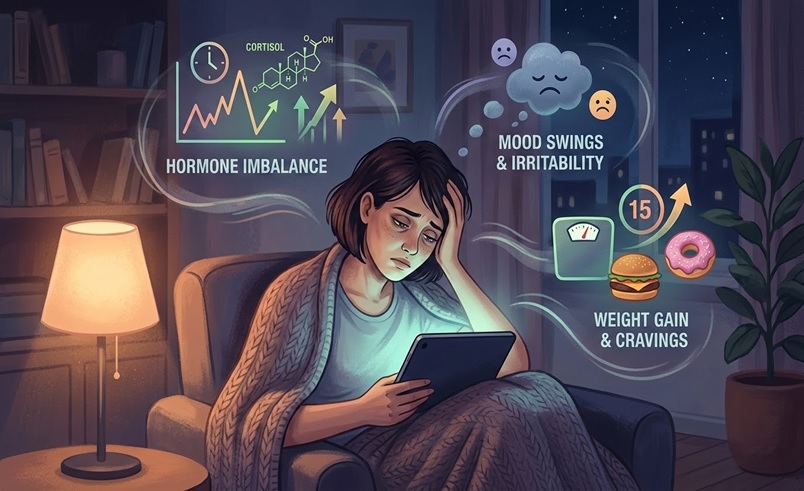
Poor sleep is often brushed off as a minor inconvenience. A bad night. A busy week. Something to catch up on later.
But when sleep problems become chronic, the effects can reach far beyond morning fatigue. Sleep helps regulate hormones, appetite, blood sugar, stress response, mood, immune function, and breathing patterns. When that system is repeatedly disrupted, the body may start compensating in ways that affect both physical and mental health.
Chronic sleep problems can also be hard to untangle because they rarely come from just one cause. Someone may feel anxious, gain weight, snore, wake up often, and notice changes in energy or libido without realizing these symptoms may be connected. Coordinated care between mental health providers, hormone specialists, ENT physicians, and metabolic health professionals can help determine whether poor sleep is the cause, the result, or part of a larger cycle.
Why Sleep Is a Regulatory System, Not Just Rest
Sleep is an active biological process. During different stages of sleep, the brain clears metabolic waste, the nervous system resets, and the endocrine system adjusts hormone release. Growth hormone, cortisol, insulin, leptin, ghrelin, and reproductive hormones all follow rhythms influenced by sleep quality and timing. When sleep becomes fragmented or too short, those rhythms can shift.
The National Heart, Lung, and Blood Institute notes that sleep deficiency can interfere with daytime function, alertness, work, school, driving, and social life. It has also been linked with broader health concerns involving the heart, metabolism, immune system, and mental health.
That’s why sleep problems should not be viewed only as a lifestyle issue. Someone may spend seven or eight hours in bed and still miss out on restorative sleep if breathing interruptions, pain, stress, hormonal changes, or insomnia keep the brain and body from moving through healthy sleep cycles.
Breathing Problems Can Disrupt Sleep From the Inside Out
One of the most overlooked causes of poor sleep is disrupted breathing. Obstructive sleep apnea occurs when the airway repeatedly narrows or closes during sleep. This can lead to pauses in breathing, drops in oxygen, and repeated micro-awakenings. A person may not fully remember waking up, but the body still experiences stress each time breathing is interrupted.
Mayo Clinic describes loud snoring, daytime tiredness, irritability, and concentration problems as possible signs of sleep apnea. Airway anatomy, nasal obstruction, allergies, and chronic congestion can also contribute to poor breathing during sleep.
This is where an ENT evaluation may be helpful. North Dallas ENT, an ENT clinic in Dallas, TX, is one example of a provider patients may consult for sleep apnea evaluation and airway treatment. Specialty care like this can help assess whether nasal passages, throat anatomy, or other upper-airway issues are contributing to disturbed sleep.
Sleep apnea and airway-related sleep disruption can also worsen other health problems. Repeated oxygen drops and fragmented sleep may increase stress hormones, contribute to fatigue, and make it harder to maintain healthy routines. Treating an airway issue does not automatically solve every sleep-related symptom, but it can remove a major barrier to recovery.
Cortisol, Stress, and the “Tired but Wired” Pattern
Cortisol is often called the stress hormone, but it is also part of a normal daily rhythm. Ideally, cortisol rises in the morning to support alertness, then gradually declines toward bedtime. Poor sleep can interfere with this pattern, leaving some people exhausted during the day but restless at night.
When the body repeatedly misses out on restorative sleep, the nervous system may stay in a more activated state. Stress can feel harder to manage. Emotional reactions may feel stronger. Recovery from ordinary daily demands can become more difficult. Over time, people may notice they feel tense, impatient, foggy, or easily overwhelmed.
This can create a frustrating loop. Stress makes it harder to sleep, and poor sleep makes stress harder to manage. Breaking that loop often requires more than basic sleep hygiene advice. It may involve looking at work schedules, anxiety symptoms, caffeine use, breathing problems, pain, medications, or hormonal factors that affect sleep timing and depth.
Sleep and Mental Health Are Deeply Connected
Sleep and mental health influence each other in both directions. Insomnia can increase the risk of anxiety and depression, while anxiety and depression can make sleep lighter, shorter, or more fragmented. The CDC notes that insufficient sleep is linked to increased risk of anxiety, depression, obesity, heart disease, injury, and other serious conditions.
Someone with chronic sleep disruption may experience mood symptoms that look like a primary mental health concern. These can include irritability, low motivation, poor concentration, emotional sensitivity, or loss of interest in normal activities. In other cases, an existing mental health condition may become harder to manage because the brain is not getting enough restorative sleep.
For people who need sleep-related mental health support, a mental health clinic or doctor can help evaluate whether symptoms are tied to insomnia, anxiety, depression, trauma, medication effects, or a mix of factors. Bristol Health is one example of a provider connected with mental health support, including concerns where sleep and emotional well-being overlap. This kind of care can be especially useful when sleep problems are part of a broader pattern rather than one isolated complaint.
Appetite Hormones Can Shift After Poor Sleep
Sleep loss can affect hunger and fullness signals. Leptin helps signal fullness, while ghrelin helps stimulate appetite. Research has found that insufficient or disrupted sleep may alter these appetite-related hormones in ways that increase hunger, cravings, and late-day snacking. Sleep loss can also affect impulse control, making it harder to choose balanced meals when tired.
That does not mean poor sleep automatically causes weight gain for everyone. Weight regulation is complex. Genetics, medications, activity levels, stress, medical conditions, food access, and many other factors all play a role. Still, sleep is one of the core systems that help regulate appetite and energy use.
Fatigue also changes behavior. People who are sleep deprived may move less, skip workouts, rely more on caffeine or sugar, or eat at irregular times. Over time, these patterns can affect weight, blood sugar, and metabolic health, especially when sleep disruption continues for months or years.
Testosterone and Other Hormones May Be Affected
Reproductive hormones are also sensitive to sleep. In men, testosterone production is closely tied to sleep quality and sleep timing. Some research has found that severe sleep restriction can reduce testosterone levels, although the broader relationship can vary depending on age, health status, sleep duration, and whether sleep apnea is present.
Low testosterone can be associated with fatigue, low libido, reduced muscle mass, mood changes, and trouble concentrating. But these symptoms can overlap with poor sleep, depression, thyroid problems, medication effects, and chronic stress. That overlap is why testing and careful evaluation matter before assuming hormones are the only issue.
A hormone-focused provider may assess symptoms, lab values, sleep quality, metabolic health, and other contributing factors. EveresT Men’s Health, for instance, is associated with Testosterone Replacement Therapy, hormone optimization, low T treatment, and care from a low testosterone doctor. In an educational context, this type of evaluation is most useful when sleep disorders are considered part of the bigger picture, not treated as a separate issue.
Blood Sugar, Insulin, and Metabolic Regulation
Poor sleep can influence how the body handles glucose. Sleep restriction has been associated with changes in insulin sensitivity and carbohydrate metabolism, which may raise concern for people at risk of type 2 diabetes or metabolic syndrome. A review available through the National Institutes of Health describes chronic sleep deprivation as having harmful effects on carbohydrate metabolism and being associated with increased diabetes risk.
Sleep apnea can add another layer. Repeated oxygen drops and nighttime stress responses may affect inflammation, blood pressure, and glucose regulation. When weight gain and sleep apnea occur together, they can reinforce each other. Excess weight may narrow the airway, while poor sleep may increase hunger, fatigue, and metabolic strain.
That’s why metabolic health care often needs to include sleep screening. Focusing only on calories or exercise may miss a major driver of appetite, energy, and blood sugar control. Restorative sleep can support better decision-making, steadier energy, and more consistency with nutrition and activity plans.
Weight Management Works Better When Sleep Is Addressed
Weight management is often discussed in terms of diet and exercise, but sleep can strongly influence both. Someone who sleeps poorly may have stronger cravings, less energy for physical activity, and more trouble recovering from workouts. They may also experience hormonal and metabolic changes that make progress feel slower than expected.
A clinical weight loss center may evaluate factors such as sleep quality, medications, insulin resistance, thyroid function, eating patterns, stress, and body composition. PhySlim is one example of a provider connected with medical weight loss and metabolic health management. In a coordinated care model, sleep is not treated as an afterthought. It is treated as one of the foundations of long-term metabolic improvement.
This approach can be especially important when weight gain, fatigue, snoring, mood changes, and hormone symptoms appear together. Instead of treating each symptom in isolation, clinicians can look for shared causes. Sleep apnea, chronic insomnia, low testosterone, depression, and metabolic dysfunction may overlap in ways that require more than one type of care.
Why Coordinated Care Matters
Sleep problems often sit at the intersection of multiple specialties. An ENT physician may evaluate airway obstruction, snoring, nasal blockage, or suspected sleep apnea. A mental health provider may address insomnia, anxiety, depression, trauma, or stress-related sleep disruption. A hormone specialist may evaluate testosterone, thyroid function, cortisol patterns, or other endocrine concerns. A metabolic health provider may assess weight, insulin resistance, and related risk factors.
The value of coordinated care is that it reduces guesswork. Fatigue, for example, may be caused by depression, low testosterone, sleep apnea, poor glucose control, or several of these at the same time. Treating one piece may help, but the person may continue to struggle if another major contributor is missed.
Good care also helps avoid oversimplified explanations. Not every tired person has low hormones. Not every person with weight gain has poor habits. Not every snorer has sleep apnea. And not every person with insomnia has anxiety. A careful, team-based approach can lead to a more accurate diagnosis and a more realistic treatment plan.
Conclusion
Chronic poor sleep can quietly affect hormones, mood, appetite, weight, and metabolic health. Its effects may show up as fatigue, irritability, cravings, low motivation, weight gain, low libido, brain fog, or difficulty managing stress. Because these symptoms overlap across many conditions, it is easy to miss the role sleep plays.
The most effective approach is often a coordinated one. When mental health providers, hormone specialists, ENT physicians, and metabolic health professionals work from the same overall picture, patients are more likely to receive care that addresses the root causes of disrupted sleep and its wider effects.
Sleep is not separate from health. It is one of the systems that helps hold the rest together.