

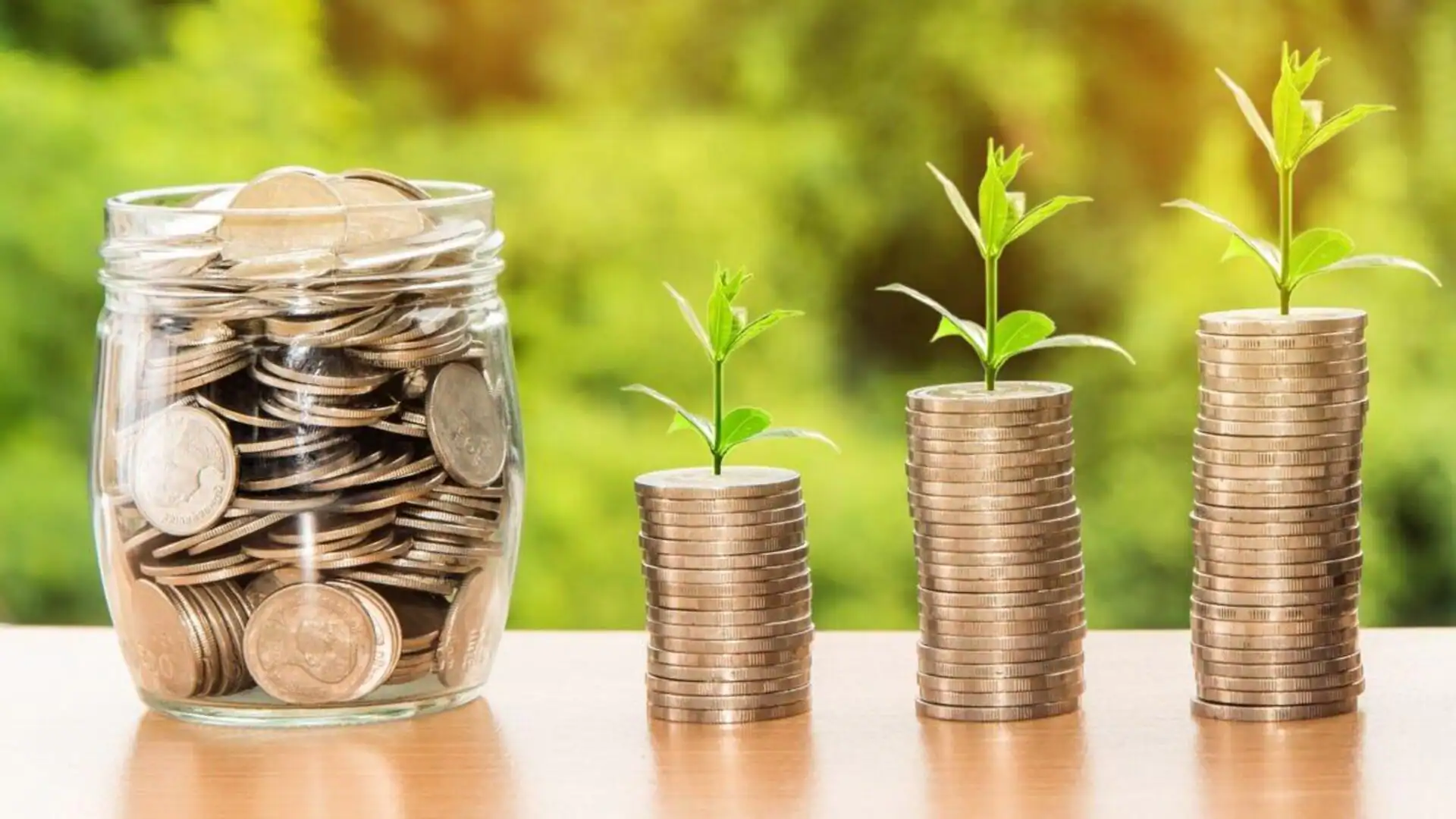
Building substantial wealth does not always require an inheritance, an exceptionally high salary, or high-risk investments. Instead, the most reliable path to financial independence relies on a fundamental mathematical concept known as compound interest. Often described as money making money, compounding is the process where your investment earnings are reinvested to generate their own earnings over time.
While simple interest only pays a return on the original principal amount, compound interest calculates returns on both the initial principal and the accumulated interest from previous periods. In the early stages of an investment plan, the growth appears modest and linear. However, over extended periods, this cycle creates an exponential growth curve that can turn disciplined, moderate savings into significant wealth. Understanding the mechanics of this financial force allows anyone to structure a long-term strategy for financial security.
The Core Mechanics of the Compounding Engine
To harness the power of compound interest, an investor must understand the variables that drive the compounding engine. The ultimate size of an investment portfolio is determined by three primary factors: the initial principal, the rate of return, and time. Among these, time is the most potent catalyst.
Consider a baseline scenario to illustrate how compounding diverges from simple math. If you invest ten thousand dollars at a fixed annual return of ten percent under a simple interest structure, you will earn one thousand dollars every year. After thirty years, you will have accumulated thirty thousand dollars in interest, bringing your total account value to forty thousand dollars.
When that same scenario is applied to a compound interest structure, the outcome changes dramatically:
-
Year One: Your ten thousand dollar principal earns ten percent, yielding one thousand dollars. Your total balance becomes eleven thousand dollars.
-
Year Two: The ten percent return is calculated on the new balance of eleven thousand dollars, yielding eleven hundred dollars. Your total balance rises to twelve thousand one hundred dollars.
-
Year Ten: Thanks to the compounding effect, the annual growth accelerates. The account balance reaches over twenty-five thousand nine hundred dollars.
-
Year Thirty: Without adding a single extra dollar of your own money after the initial investment, the total balance grows to over one hundred seventy-four thousand four hundred dollars.
The difference between forty thousand dollars and over one hundred seventy-four thousand dollars highlights the profound impact of compounding. The initial capital remains exactly the same, but the element of time allows the reinvested earnings to take over the heavy lifting of wealth generation.
The Critical Importance of Starting Early
Because exponential growth requires time to achieve its full momentum, the age at which you begin investing is far more important than the total amount of money you contribute later in life. This reality is often illustrated by comparing two hypothetical investors who take different approaches to saving for retirement.
Investor A begins saving at age twenty-five. They contribute five thousand dollars annually into an investment account that achieves an average eight percent annual return. They maintain this discipline for just ten years, stopping all contributions completely at age thirty-five. Over that decade, Investor A invested a total of fifty thousand dollars of their own money.
Investor B delays saving until age thirty-five. Recognizing they are behind, they contribute the same five thousand dollars annually at the identical eight percent return. However, they maintain these contributions for thirty consecutive years until reaching age sixty-five. Over this period, Investor B invested a total of one hundred fifty thousand dollars of their own capital, which is three times the amount contributed by Investor A.
When both individuals reach age sixty-five, the financial outcomes are surprising:
-
Investor A Portfolio: Despite never contributing another dollar after age thirty-five, Investor A accumulated wealth of roughly six hundred thousand dollars by age sixty-five.
-
Investor B Portfolio: Despite saving diligently for three decades and contributing far more money, Investor B finishes with roughly appointments of five hundred sixty thousand dollars.
Investor A achieved a larger final balance with a fraction of the personal capital simply because their money had an extra ten years to compound in the background. This dynamic emphasizes why waiting for the perfect time or a higher salary to start investing is an expensive mistake. Every year of delay strips away the most valuable asset you have: time.
Compounding Frequency and Its Impact on Returns
Another variable that influences the speed of wealth accumulation is the frequency with which interest is compounded. Financial institutions and investment platforms can calculate and apply compound interest on various schedules, including annually, semi-annually, quarterly, monthly, or even daily.
The more frequently interest is compounded within a year, the faster your wealth expands. For example, if you place ten thousand dollars into an account with a six percent annual interest rate, an annual compounding schedule will yield six hundred dollars by the end of the year. If that same account compounds monthly, the interest earned each month is added to the balance before the next month’s calculation occurs. This subtle shift means you earn interest on your interest twelve times throughout the year, resulting in a slightly higher total return.
While the difference between monthly and annual compounding may seem minor on a small balance over twelve months, the variance becomes significant when scaled across hundreds of thousands of dollars over several decades. When evaluating investment vehicles, high-yield savings options, or fixed-income assets, always verify the compounding frequency to ensure you optimize your return potential.
Ideal Vehicles for Leveraging Compound Interest
To fully exploit the benefits of compounding, your money must be placed in environments where it can grow safely and efficiently without being drained by unnecessary taxes or high administrative fees. Several primary vehicles serve this purpose exceptionally well.
Tax-Advantaged Retirement Accounts
Employer-sponsored 401k plans and Individual Retirement Accounts are specifically engineered to maximize the compounding effect. In a traditional account, your investments grow tax-deferred, meaning you do not pay annual capital gains taxes on your dividends or growth. In a Roth account, you invest after-tax dollars, allowing your wealth to compound entirely tax-free, and qualified withdrawals in retirement are completely shielded from Uncle Sam. By eliminating the annual tax drag, more capital remains in the account to fuel the compounding process.
Low-Cost Index Funds and ETFs
The fees charged by investment managers can silently erode the power of compound interest. A two percent annual management fee might seem small, but when deducted from your returns year after year, it can cost you hundreds of thousands of dollars in lost compounding potential over a lifetime. Broad-market index funds and Exchange-Traded Funds track entire market benchmarks like the S&P 500 while charging minimal fees, often below one-tenth of a percent, ensuring that the vast majority of your market returns stay in your portfolio.
Dividend Reinvestment Plans
Many established corporations pay out a portion of their profits to shareholders in the form of cash dividends. Rather than taking these payouts as disposable cash, smart investors enroll in a Dividend Reinvestment Plan. This automated feature uses your dividend payouts to immediately purchase additional fractional shares of the underlying stock. This increases the total number of shares you own, which in turn increases your next dividend payout, creating a powerful compounding cycle separate from standard market price appreciation.
Practical Strategies to Maximize Wealth Building
Implementing a wealth-building plan based on compound interest requires operational consistency and strategic discipline. The following practices help ensure your capital compounds at its highest possible velocity.
-
Automate Your Contributions: Relying on willpower to save money at the end of each month rarely succeeds. By setting up automatic transfers from your paycheck directly into your investment accounts, you treat savings as a non-negotiable expense. This ensures your investment engine receives a steady stream of fresh fuel regardless of your daily spending temptations.
-
Reinvest Every Stream of Income: To maintain the compounding loop, avoid skimming profits or dividends from your portfolio during your wealth-accumulation years. Every dollar removed from the system permanently breaks that dollar’s ability to generate future returns.
-
Maintain Long-Term Discipline: The greatest threat to compound interest is human emotion. During stock market downturns, the temptation to sell investments to avoid temporary paper losses is strong. However, compounding requires long-term exposure to the market to reveal its exponential properties. Portfolios that remain steadily invested through market cycles historically outperform those that try to time the market.
Frequently Asked Questions
What is the Rule of 72 and how does it relate to compound interest?
The Rule of 72 is a simplified mental shortcut used to estimate how long it will take an investment to double in value at a fixed annual rate of return. To use this rule, divide seventy-two by your expected annual interest rate. For example, if your investment portfolio earns an average annual return of eight percent, dividing seventy-two by eight reveals that your initial capital will double approximately every nine years through the power of compounding.
How does inflation affect the long-term power of compound interest?
While compound interest increases the nominal dollar amount of your wealth, inflation erodes the purchasing power of those dollars over time. If your investment account earns a seven percent return but the cost of goods rises by three percent due to inflation, your real rate of return is effectively four percent. To combat this reality, wealth builders must invest in assets that historically outpace inflation, such as equities and real estate, rather than keeping long-term funds in low-yield cash accounts.
Can compound interest work against you in your personal finances?
Yes, compound interest is a double-edged sword that works just as efficiently in reverse when you carry high-interest debt, such as credit card balances. When you fail to pay off a credit card bill in full, the financial institution charges interest on your outstanding balance. If left unpaid, that interest is added to your debt principal, and the next month’s interest is calculated on that larger amount, trapping you in a compounding spiral of growing debt.
What is the difference between Annual Percentage Yield and Annual Percentage Rate?
The difference comes down to compound interest. The Annual Percentage Rate represents the baseline interest rate charged or earned over a year without taking compounding into account. The Annual Percentage Yield reflects the actual total return or cost over a year because it factor in how frequently interest compounds during that period. When comparing savings accounts, a higher APY indicates a more profitable compounding structure.
Do I need a large amount of money to open an investment account and start compounding?
No, the modern financial landscape has eliminated old barriers to entry. Many brokerage firms and investment platforms allow you to open accounts with no minimum initial deposit and offer fractional share investing. This feature allows you to invest as little as five or ten dollars at a time, making it easy to start leveraging the power of compound interest immediately, regardless of your current financial situation.
Is compound interest guaranteed when investing in the stock market?
No, compound interest in its literal sense is only guaranteed in fixed-income environments like bank certificates of deposit or government bonds, where a specific interest rate is contractually promised. When investing in the stock market, returns fluctuate daily based on corporate performance and economic conditions. However, when economists discuss compounding in the stock market, they are referring to the historical tendency of long-term market gains and reinvested dividends to mimic the exponential growth curve of compound interest.